The Winter Lamb
Three Bags FullThe Winter Lamb is a difficult, troublesome member of George Glenn’s flock, feared as a bringer of bad luck but marked by stubborn survival and an unsettling instinct for moral questions. Born at the darkest hour of a winter night, he loses his mother and is expected to die; instead, he grows into a cunning milk thief whose challenges to Othello complicate the flock’s ideas about justice and blame.
Identity and Early Life
The flock calls him the winter lamb, a label that carries more weight than a simple description of the season. Sheep believe that lambs born in winter arrive at the wrong time, in the cold, with twisted characters and bad souls. Their supposed presence can bring robbers to vulnerable flocks during the lean part of the year. The belief makes the lamb an omen before he has done anything at all: the flock reads his birth as a warning about misfortune.
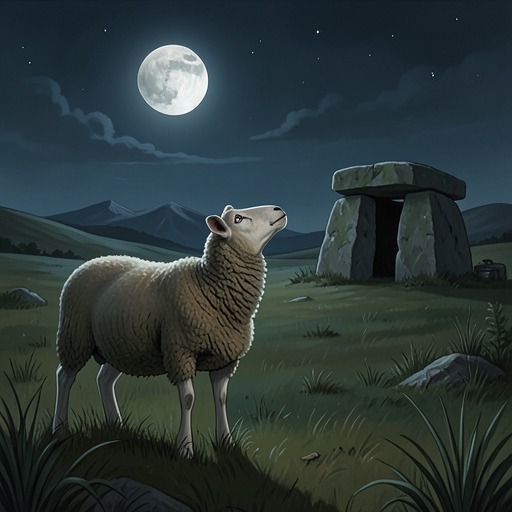
His beginning gives that superstition a harshly practical setting. He is born during the darkest hour of the night, and his mother dies. The sheep expect him to die too, but he totters after the flock, squealing, and they make room for him reluctantly. He keeps going for two days. On the third, when the flock expects his death, George Glenn intervenes with a bottle of milk. Although the sheep bleat their disapproval, George calls the lamb brave and raises him. The lamb’s survival therefore begins in tension between the flock’s expectation that he will perish and George’s decision to keep him alive.
His body remains conspicuously out of proportion: small and shaggy, with a head too large for him, and far too small for a lamb of his age—more like a goat in scale. Yet the narrative pairs that vulnerability with toughness and cunning. The flock tries to ignore him, but his size does not make him harmless or easy to overlook.
Mischief and Place in the Flock
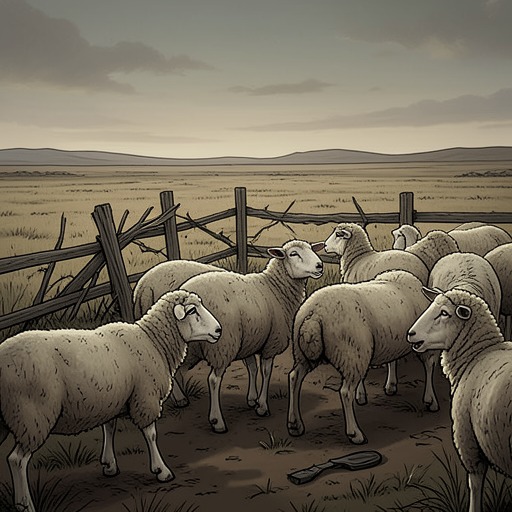
The lamb earns his reputation through repeated opportunism. While the sheep are absorbed in a grave discussion, he takes advantage of their distraction to steal milk from Sara. When Sara twists and turns in agitation and her lamb stands tearful beside her, the small, shaggy culprit darts away in a zigzag. The episode is brief, but it distills his place in the community: he is an outsider within the flock, ready to exploit a moment when everyone else is preoccupied.
The flock’s dislike of him is not merely a response to that single theft. They regard him as the worst winter lamb they have encountered, and their long-standing irritation turns his survival into a continuing nuisance. Yet the contrast between their judgment and George Glenn’s act of care remains important. The sheep’s prophecy of bad character accompanies the lamb from birth, while George’s bottle and decision to rear him answer that prophecy with a practical act of protection. The lamb is at once a source of disorder and a life the flock might have lost had George accepted its expectations.
Questions of Justice
The lamb’s sharper significance emerges in his conversation with Othello. When Othello quietly repeats the word justice, the lamb asks what justice is. Othello answers in terms of freedom: being able to go where one likes, graze where one wants, and fight to follow one’s own way without having it stolen. The lamb then turns that account toward George Glenn, asking whether George’s way was stolen too.
Rather than simply accept George as an innocent victim, the lamb proposes a difficult possibility: perhaps George had stolen from others after all, perhaps because no one would give him anything. He presses Othello to consider who should bear blame when a person is refused what he needs. Othello immediately blames God, and the lamb asks why. The exchange does not settle the question; its force lies in the way the lamb refuses an easy division between the wronged and the wrongdoer. His questions make justice answerable not only to the act, but also to deprivation and the conditions that might lead someone to steal.
That challenge is especially pointed because the lamb himself is introduced as a thief. His theft of Sara’s milk is a small act of opportunism, not an established parallel to George Glenn’s conduct, but it gives the lamb an unusual position from which to question moral certainty. The narrative lets the supposedly ill-starred troublemaker articulate a more searching problem than the older ram’s confident definition can resolve.
The Flock’s Future and Narrative Role
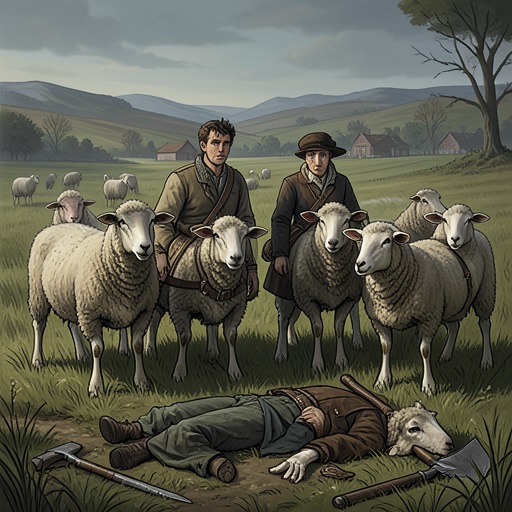
The lamb belongs to the collective decisions that shape the flock’s future, though the novel does not single him out as the author of those choices. George Glenn’s will provides money for the sheep to go to Europe and requires an authorized representative to accompany them as their shepherd. The representative must observe the will’s conditions, including having stories read aloud to the sheep each day; the lawyer is to check that those duties are fulfilled. When no one else steps forward, Rebecca offers to take the role. Gabriel also tries to draw the flock to him, but Othello walks to Rebecca and the sheep gather around her.
Rebecca’s nightly reading later gives the flock a story about a little girl with a secret father. The father plans to travel to Europe and asks to see her, but the girl hides her joy and keeps him waiting; he waits himself to death. The tale is not presented as the lamb’s narration or as his individual interpretation. Its relevance to his place in the flock is that he shares the scene in which Rebecca gives George Glenn’s family history a story-shaped form, while the flock is bound for the Europe promised in George’s will.
The Winter Lamb’s narrative function rests on this double position. The flock sees him through an inherited superstition and his disruptive acts, but he is not confined to the role of comic nuisance: his questions make room for doubt about blame, need, and justice. In a story where the sheep must learn to choose their own way rather than simply follow whoever claims authority, the lamb’s troublesome habit of asking what a rule or judgment means becomes more than mischief. It is a small but persistent pressure against accepting the flock’s first explanation of events.